
Finding a reliable beeswax supplier in Malaysia is important for businesses that manufacture skincare products, handmade cosmetics, lip balms, body butters, lotions and other personal care products. Beeswax is a versatile cosmetic ingredient valued for its texture, consistency and ability to help form a protective film on the skin.
For cosmetic formulators, product developers and growing skincare brands, choosing the right beeswax supplier involves more than comparing prices. Product quality, specifications, packaging, availability and suitability for cosmetic applications should all be considered before placing a bulk order.
Whether you are starting a handmade skincare business or expanding an established cosmetic brand, understanding how beeswax works and how to source it can help you make better purchasing decisions.
In this guide, we explore the uses of beeswax in cosmetics, the differences between common beeswax types, and what businesses should consider when choosing a wholesale beeswax supplier in Malaysia.
What Is Beeswax?
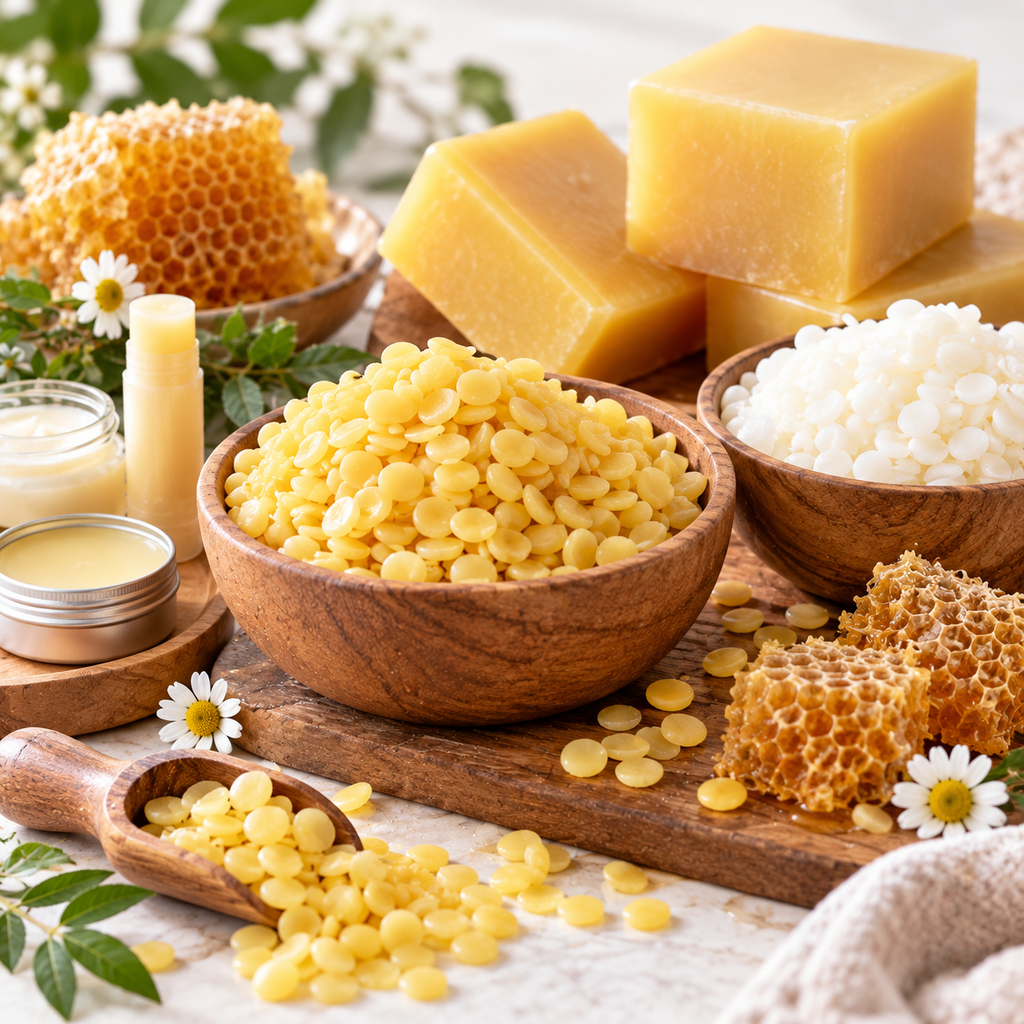
Beeswax is a natural wax produced by honeybees. It is widely used in cosmetic and personal care formulations because of its waxy texture, consistency and ability to contribute structure to oil-based products.
In skincare formulation, beeswax is commonly used as a structuring agent, thickener and consistency enhancer. It can help improve the texture of products such as lip balms, body butters, salves and oil-based skincare formulations.
Beeswax can also help form a protective film on the skin, reducing moisture loss when incorporated into a suitable formulation. However, its performance depends on the complete formula, concentration and other ingredients used.
For businesses developing natural-inspired skincare products, beeswax can be a useful ingredient to consider when creating products with a richer texture or firmer consistency.
Why Is Beeswax Used in Cosmetic and Skincare Products?
Beeswax has several functional applications in cosmetic formulation, making it relevant to both small handmade businesses and commercial skincare manufacturers.
1. Helps Thicken Cosmetic Formulations
Beeswax can increase the viscosity and firmness of oil-based products. This makes it useful when developing lip balms, body balms, salves and other products that require a thicker consistency.
The amount of beeswax used will influence the finished product’s hardness and spreadability. Formulators should test different concentrations to achieve the desired texture.
2. Supports Skin Moisture Retention
Beeswax can form a film on the skin that helps reduce moisture loss. This makes it useful in formulations designed to leave a protective, conditioning layer.
It is often combined with carrier oils and butters to create richer skincare products.
3. Improves Product Structure
In anhydrous formulations, such as lip balms and body balms, beeswax helps create a more stable structure at room temperature.
It can also influence the melting behaviour and firmness of the finished product, which are important considerations for products sold in warm climates such as Malaysia.
4. Adds Texture to Skincare Products
Beeswax contributes a distinctive waxy consistency that can be adjusted by balancing it with oils, butters and other ingredients.
This gives formulators flexibility when developing products ranging from soft balms to firmer solid formulations.
5. Supports Natural-Inspired Product Concepts
Beeswax is often used in formulations positioned around botanical, traditional or natural-inspired skincare.
Businesses should still evaluate the complete ingredient list and substantiate any product claims. The presence of beeswax alone does not automatically make a finished product organic, hypoallergenic or suitable for every skin type.
Common Cosmetic Applications of Beeswax
Businesses sourcing beeswax wholesale may use it across several cosmetic and personal care categories.
Lip Balms
Beeswax is a common ingredient in lip balm formulations because it helps provide firmness and structure. It is typically combined with carrier oils and butters to create a product that spreads comfortably across the lips.
Body Balms and Salves
Beeswax can help create a thicker, more protective consistency in body balms and salves. It is often combined with ingredients such as shea butter, cocoa butter and suitable carrier oils.
Body Butters
Although body butters can be formulated without wax, beeswax may be used in certain formulations to increase firmness and modify texture.
The appropriate amount depends on the desired product consistency and how the finished product will be packaged.
Creams and Lotions
Beeswax can be incorporated into some emulsion formulations to modify viscosity and texture. However, it is not a complete substitute for an appropriate emulsifier.
Formulators developing creams and lotions should ensure that the emulsification system, preservation strategy and stability testing are suitable for the finished product.
Solid Perfumes
Beeswax can help provide structure in solid perfume formulations, which may combine waxes, oils and fragrance materials.
The finished formulation should be assessed for fragrance compatibility, skin safety and stability.
Handmade Soap
Beeswax is sometimes used in certain soap formulations to influence hardness and other product characteristics. Its use requires appropriate formulation knowledge, as excessive amounts may affect lather and processing.
Businesses using melt-and-pour soap bases should check the base manufacturer’s recommendations before adding beeswax or other ingredients.
Types of Beeswax: Yellow vs White Beeswax
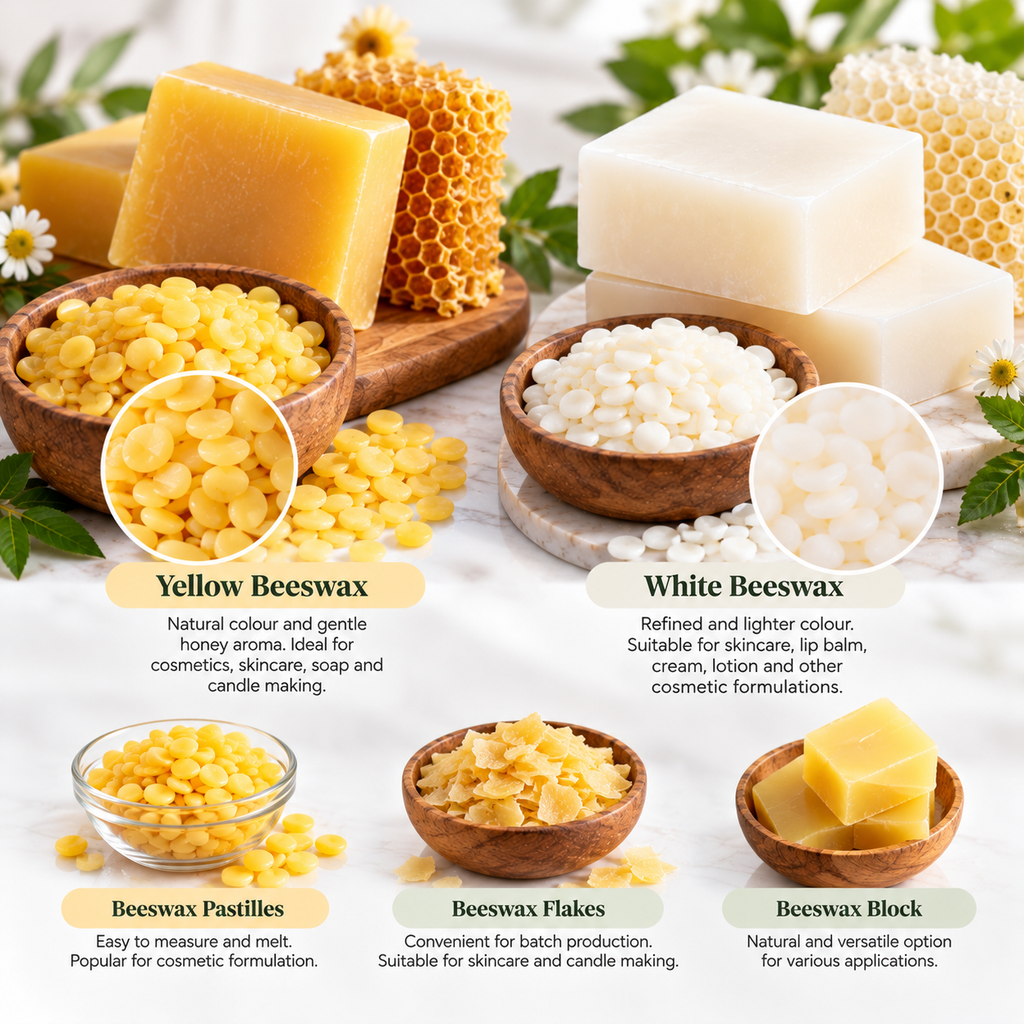
When sourcing beeswax for cosmetic products, businesses may encounter yellow beeswax and white beeswax.
The best choice depends on the intended product, appearance requirements and supplier specifications.
Yellow Beeswax
Yellow beeswax generally retains more of its natural colour and may have a characteristic waxy scent.
It can be suitable for products where a warm yellow colour fits the product concept, such as traditional balms, solid skincare products and natural-inspired formulations.
Its colour and scent may influence the appearance and aroma of the finished product, particularly in lightly coloured formulations.
White Beeswax
White beeswax is processed to produce a lighter colour. It may be preferred for formulations where a white or pale appearance is important.
It can be useful in products such as white lip balms, pale creams, lotions and other cosmetic formulations where colour consistency matters.
The exact characteristics of both types depend on the supplier’s product specifications and processing methods.
Which beeswax should you choose?
If your product requires a warm, natural-looking colour, yellow beeswax may be worth considering. If colour neutrality is a priority, white beeswax may be more appropriate.
Before buying beeswax in bulk, request product specifications and evaluate a sample in your intended formulation.
How to Choose a Reliable Beeswax Supplier in Malaysia
Choosing the right supplier can help businesses maintain a more consistent raw material sourcing process.
Here are several factors to consider before purchasing.
1. Check Product Specifications
Ask for relevant information about the beeswax, including its grade, physical characteristics, colour, odour and other available specifications.
For cosmetic applications, ensure that the material is suitable for the intended use and that the supplier can provide the relevant documentation where applicable.
Do not assume that every beeswax product sold online is automatically suitable for cosmetic manufacturing.
2. Ask About Packaging and Bulk Quantities
Different businesses have different purchasing requirements.
A small handmade skincare business may need a smaller pack for product development, while a manufacturer may require larger quantities for regular production.
When contacting a beeswax supplier in Malaysia, ask about available pack sizes, minimum order quantities and wholesale purchasing arrangements.
3. Evaluate Consistency
Consistency matters when producing products repeatedly.
Variations in colour, odour or physical characteristics can affect the appearance and processing of your finished products.
Businesses should establish suitable incoming quality checks and evaluate supplier documentation to support their quality control procedures.
4. Compare Overall Value
The lowest price per kilogram does not always represent the best purchasing decision.
Compare the total value of each supplier’s offer, including product specifications, packaging, order quantities, availability, delivery arrangements and customer support.
For businesses with recurring production, reliable supply can be particularly important.
5. Consider Long-Term Availability
If beeswax is an important ingredient in your product range, consider whether your supplier can support your expected purchasing requirements over time.
Discuss ordering lead times and stock availability before committing to a production schedule.
Buying Wholesale Beeswax: What Businesses Should Know
Purchasing wholesale beeswax in Malaysia can be practical for businesses that use the ingredient regularly.
However, wholesale purchasing should be planned according to actual production requirements.
Before placing a large order, consider:
- Your monthly production volume.
- The amount of beeswax required per batch.
- Your product development and testing needs.
- Available storage space.
- The expected rate of raw material consumption.
- Supplier lead times and replenishment schedules.
- Your purchasing budget.
If you are developing a new product, testing a smaller quantity first can help reduce the risk of holding excess inventory.
Once your formulation and sales demand are established, you can plan larger purchases with greater confidence.
How to Store Beeswax Properly
Proper storage helps preserve the quality of beeswax before it is used in production.
As a general guideline, store beeswax in a clean, dry environment away from direct sunlight, excessive heat and strong odours.
Keep it in suitable, closed packaging to protect it from dust and contamination. Follow the supplier’s recommended storage conditions and handling instructions.
For commercial manufacturing, businesses should also establish a raw material inventory system that records product details, supplier information, lot or batch numbers where available, and receipt dates.
These practices can support better traceability and quality management.
Beeswax and Other Cosmetic Raw Materials
Beeswax is often used alongside other ingredients in cosmetic formulation. Depending on the finished product, these may include:
- Carrier oils: Such as jojoba oil, sweet almond oil and other suitable cosmetic oils.
- Cosmetic butters: Such as shea butter and cocoa butter.
- Essential oils: Used in selected formulations where the intended application and safety requirements permit.
- Fragrance oils: Used in compatible formulations at appropriate usage levels.
- Botanical extracts: Selected according to their compatibility and intended function.
- Active ingredients: Used when suitable for the formulation, processing conditions and product claims.
For example, a lip balm may combine beeswax with carrier oils and butters, while a body balm may use a different balance of waxes, oils and other ingredients to achieve a softer or firmer texture.
Every ingredient must be evaluated for compatibility, appropriate usage levels and finished-product stability. Products containing water also require a suitable preservation system and appropriate microbiological testing.
Who Should Buy Beeswax Wholesale?
Wholesale beeswax may be relevant to several types of businesses.
Skincare brands: Companies developing lip balms, body balms and other personal care products.
Handmade cosmetic businesses: Small businesses producing handcrafted skincare and beauty products.
Cosmetic formulators: Professionals and product developers creating new formulations.
Private label businesses: Brands working with suitable manufacturing partners to develop their own product ranges.
Contract manufacturers: Businesses requiring cosmetic raw materials for commercial production.
Soap makers: Businesses using beeswax in compatible soap formulations.
If your business uses beeswax regularly, working with a suitable supplier can help simplify purchasing and support production planning.
Why Source Cosmetic Raw Materials from Green Herbology?
Green Herbology supplies raw materials for businesses involved in skincare, soap making, personal care and cosmetic product development.
For businesses looking for a beeswax supplier in Malaysia, it is important to identify the required beeswax type, quantity and intended application before purchasing.
Businesses developing a wider range of products may also need other cosmetic raw materials, including carrier oils, essential oils, fragrance oils, botanical ingredients and cosmetic bases.
Sourcing multiple raw material categories from a supplier that meets your requirements can help simplify procurement and supplier management.
Whether you are developing a new skincare product, producing handmade cosmetics or expanding an existing product range, Green Herbology can be a starting point for discussing your raw material requirements.
Contact the team to enquire about current product availability, specifications, packaging sizes and wholesale purchasing options.
Frequently Asked Questions About Wholesale Beeswax
Where can I buy beeswax in Malaysia?
You can search for local cosmetic raw material suppliers that offer beeswax suitable for your intended application. Before purchasing, confirm the product specifications, available quantities and relevant documentation.
What is the difference between yellow and white beeswax?
Yellow beeswax generally retains more of its natural colour, while white beeswax is processed to produce a lighter appearance. Your choice depends on the colour requirements and specifications of your finished product.
Is beeswax suitable for skincare products?
Beeswax is commonly used in cosmetic formulations such as lip balms, body balms and certain creams and lotions. Its suitability depends on the complete formulation, intended application and relevant safety assessments.
Can I buy beeswax in bulk for manufacturing?
Yes, wholesale and bulk purchasing can be suitable for businesses that use beeswax regularly. Ask the supplier about available quantities, minimum orders, specifications and supply arrangements.
Can beeswax be used with carrier oils and shea butter?
Yes. Beeswax is commonly combined with carrier oils and cosmetic butters to adjust the texture and firmness of oil-based products. The proportions should be tested to achieve the desired consistency and performance.
Conclusion
Choosing a reliable beeswax supplier in Malaysia is an important step for businesses developing cosmetic and skincare products.
Before purchasing wholesale beeswax, evaluate its specifications, intended application, available quantities, consistency, storage requirements and supplier reliability.
Yellow and white beeswax can serve different formulation needs, while combinations with carrier oils and cosmetic butters can help create products with a variety of textures and applications.
For businesses planning regular production, selecting an appropriate supplier and maintaining good raw material quality control can support a more efficient procurement process.
Looking for wholesale beeswax for cosmetic and skincare products? Contact Green Herbology to enquire about product availability, specifications and bulk purchasing options for your business.